 Tajul Furqan

You memorized those surahs years ago. You were solid. And then, slowly, without you even noticing, they started to slip.
That slipping is not a memory problem. It is a revision problem. And there is a Hifz revision system built specifically to stop it, used by teachers of the Quran for generations. It is called sabak, sabqi and manzil.
If you did any time in a Hifz class as a kid, you probably heard these words. But hearing them and actually understanding why the system works are two different things. Once you understand the logic behind it, you can apply it yourself, right now, even if you have been away from the Quran for years.
What Sabak, Sabqi, and Manzil Actually Mean
These three words describe three different categories of revision that happen every single day. They work together like a three-layer filter. Every ayah you have memorized flows through all three layers, at different speeds, to stay strong.
Sabak is your new lesson. This is the fresh material you are memorizing today. It is raw, brand new, and needs the most repetition. Think of it as wet cement. You have to smooth it out and wait for it to set before you move on.
Sabqi is your recent lesson. These are the pages you memorized in the last few days or the last week. They are not new anymore, but they are not solid yet either. They are at the most dangerous stage, because you feel like you know them, but you don't fully own them yet. Skipping sabqi is the number one reason people forget what they just memorized.
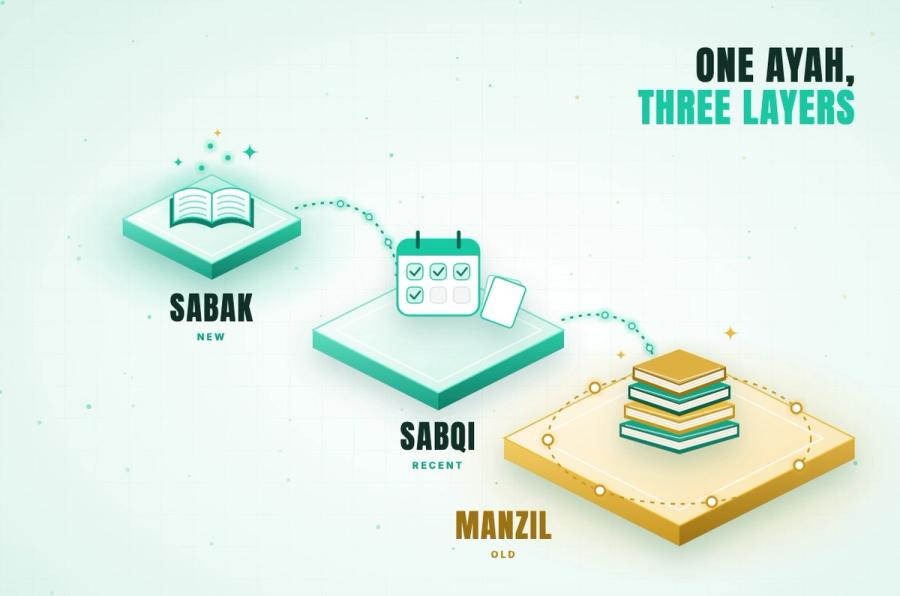
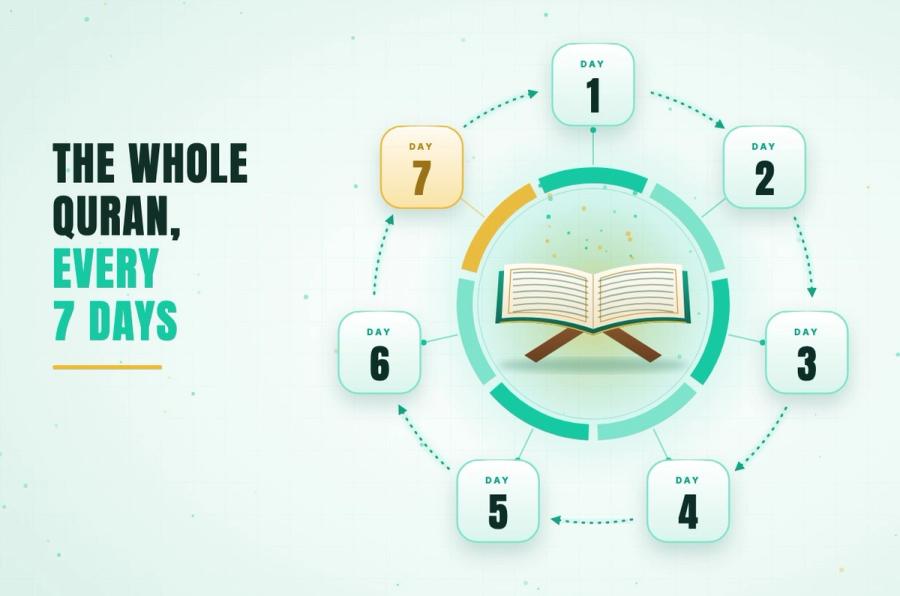
Manzil is your old lesson. This is everything you memorized before the recent pages. Your whole Hifz bank. Your manzil gets reviewed in a slow, rotating cycle so that nothing drifts too far away from you. In a typical madrasah setup, the full Quran is divided into seven manzils, one for each day of the week, so you complete a full cycle of your memorization every week.
Why the System Works: The Science You Already Know
Your brain does not store memories permanently the first time you encounter something. It needs to be reminded. Each reminder at the right moment deepens the trace a little more, until eventually the memory becomes nearly automatic.
This is called spaced repetition, and the sabak sabqi manzil system is a traditional Islamic implementation of it, developed long before scientists had a name for it. Sabak hits the new material hard. Sabqi catches it before it fades. Manzil maintains everything you built before. Each layer serves a different part of the forgetting curve.
If you have ever added new surahs and watched old ones fall apart, there is actually a post that explains exactly why that happens: why adding new surahs makes you forget old ones. The short answer is that without a manzil rotation, your old memorization starves.
How to Apply This System If You Are Starting Over
Here is the honest situation most returning adults are in. You have some memorization already. Juz Amma is probably still there in some form. Maybe a few longer surahs from your madrasah years. But you have not memorized anything new in a long time, and even what you have feels shaky.
In that case, do not start with sabak right away. Start with manzil only. Take what you already have and divide it into small daily portions. Recite a portion each day until you have gone through everything you know. This is recovery before growth.
Once your existing memorization feels stable under daily review, then introduce sabak. New material. Small amounts, one to three lines a day. And the moment you start memorizing new material, your sabqi kicks in too, because you now have recent pages that need protecting.
If you want a concrete starting point for how much new versus old to review each session, the Hifz revision ratio formula breaks it down simply.
A Simple Daily Structure You Can Actually Follow
Most adults do not have two hours in the morning like a full-time Hifz student. That is fine. The system still works with 30 to 45 minutes if you protect them consistently.
A realistic daily structure looks like this. Start with manzil, your rotating old portion. This should take the most time because it covers the most material. Then move to sabqi, your recent pages from the last few days. Repeat them until they feel clean. Finally, end with sabak, your new lines for today. Even five lines of clean, solid new memorization beats twenty rushed, shaky ones.
The Prophet, peace be upon him, said: 'The one who is proficient in reciting the Quran will be with the noble and righteous scribes, and the one who reads it but finds it difficult will have a double reward.' (Sahih al-Bukhari, hadith 4937, sahih). That double reward exists for the person who shows up even when it is hard. The system is not about perfection. It is about showing up inside a structure.
The Part Nobody Tells You About Manzil
Manzil is underrated. Most people who return to Hifz after a break focus entirely on what new material they can memorize. They skip the manzil because reviewing old stuff feels like moving backward.
It is not moving backward. It is building the foundation that makes new memorization possible. A weak manzil means your old surahs are always on the verge of slipping. A strong manzil means you have a stable base and mental bandwidth to actually absorb new material.
Think of it this way. If you have Juz Amma memorized and you never touch it, within six months parts of it will start to feel unfamiliar. Within two years, some of it will feel like you never memorized it at all. But if Juz Amma is in your weekly manzil rotation, it just keeps getting stronger without much effort.
Go Deeper: Our Keep It for Life Series
Each of these articles takes one part of this topic further.
- Why Adding New Surahs Makes You Forget Old Ones
- Hifz Revision Ratio: 1 New Line + 5 Old Lines Formula
- Why You Keep Forgetting Everything You Memorize (And How to Break the Loop for Good)
- Lonely Hifz Journey: When No One Around You Gets It
- Hifz Revision Schedule: A Week That Fits What You Hold
The Quran you memorized deserves to be protected. May Allah make it easy for you, keep it on your tongue, and make you from the people of the Quran. Ameen.
Keep Every Page With The Self-Hifz Blueprint
The Self-Hifz Blueprint is our step-by-step guide to memorizing the Quran by yourself, at home, at your own pace.
It includes a weekly revision schedule and printable trackers, so no page slips without you noticing.
Would you rather track your revision on your phone? HifzBuddy is our Hifz planning and tracking app.
Get The Self-Hifz Blueprint and start your next session with a clear plan.