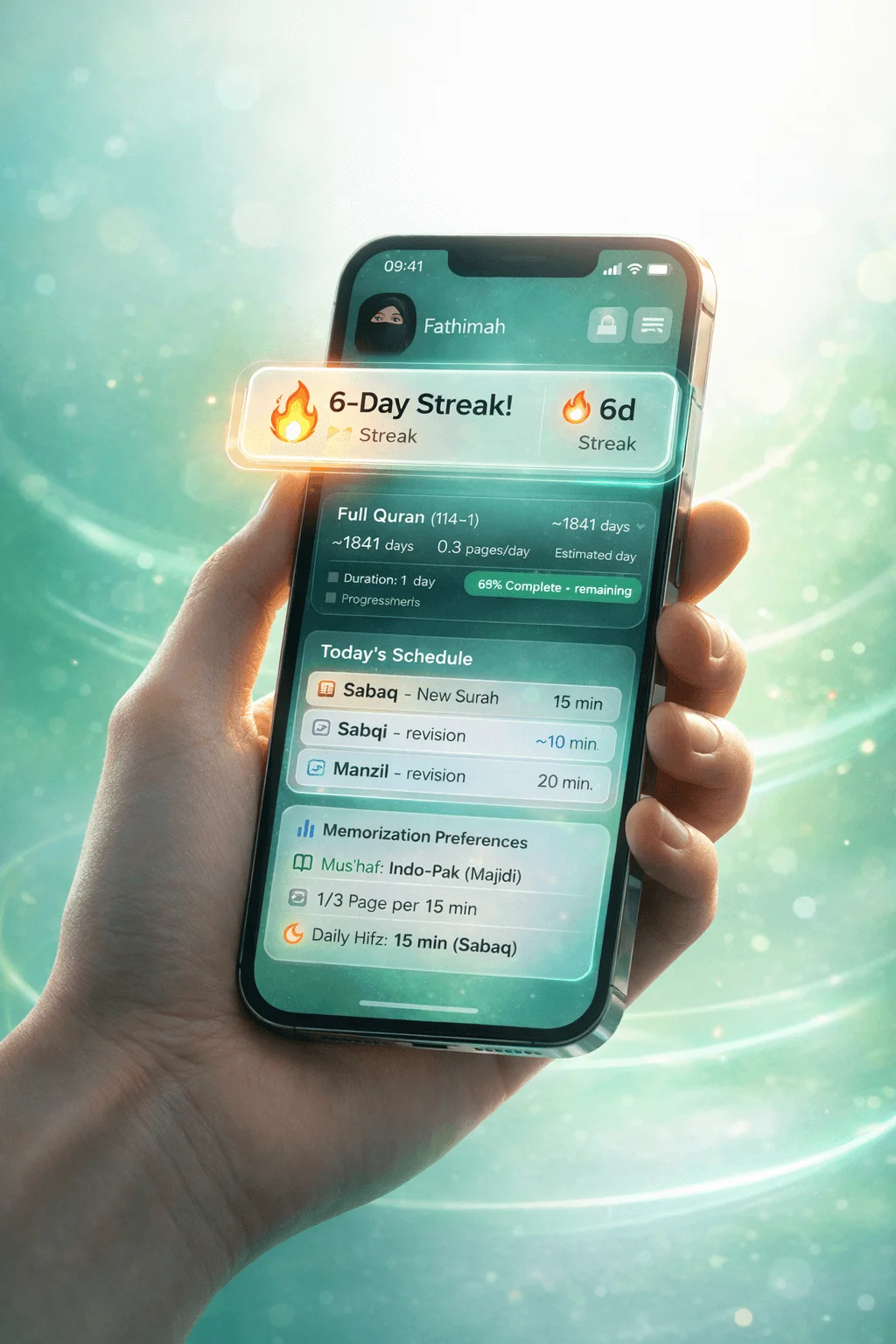
Here is something that might stop you mid-scroll. The Quran will speak on your behalf on the Day of Judgment. Not just for the person who finished all 30 juz. For you. The one who is still trying. You know the weight of that unfinished hifz. You started years ago. Maybe you got through Juz 30 at madrasah. Maybe you made it halfway. Then life hit, and you stopped. And now there is this quiet ache — what if I never finish? What if I die with it incomplete? That fear is real. But the answer might be very different from what you have been telling yourself. The Hadith That Should Change Everything for You The Prophet, peace be upon him, said: "Read the Quran, for it will come as an intercessor for its companions on the Day of Resurrection." (Sahih Muslim, no. 804) Its companions. Not just its completers. Not just those who sealed the final page of a mushaf in a ceremony. Its companions — those who lived with it, wrestled with it, kept returning to it even when it was hard. You have been a companion of the Quran. Even if you feel like you failed it. What Does Intercession Actually Look Like Picture the Day of Judgment. Everything you did in this life is laid bare. You are terrified. And then something steps forward to speak for you. Something that knows your nights. The nights you stayed up repeating an ayah until it clicked. The mornings you opened your mushaf before your phone. The private moments nobody saw. That is what the scholars explain about Quran intercession. Ibn Kathir, in his tafsir commentary, speaks about the Quran standing before Allah as a witness for those who honoured it and held it close. It will argue in your favour. It will say: this person tried. This person came back. This person did not abandon me permanently — life got in the way, but their heart always pointed back. Now think about your situation. You are reading this right now because the Quran has not left your heart. That pull you feel to restart, to go further, to become a hafiz before you die — that is not nothing. That is a sign of a heart that is still attached. The Person Who Dies Trying Is Not a Failure One of the most freeing things you can understand is this: in Islam, intentions and effort are not footnotes. They are counted. They are weighed. The Prophet, peace be upon him, said that actions are by intentions — and that applies to hifz too. If you die with a sincere intention to memorize, with genuine effort behind it, the question is not whether Allah would reward you for that. The question is how. And the scholars of Ahlus Sunnah are clear that sincerity of purpose toward the Quran is never wasted before Allah. There is actually a deep piece of comfort in what scholars say about dying without finishing your hifz. The finish line matters. But the direction of your face — toward the Quran, not away from it — matters enormously too. This is not a license to be lazy. It is a license to stop treating your partial hifz as a source of shame. Partial hifz shame is one of the biggest reasons people never restart. They feel so bad about what they lost that they cannot move toward what they could gain. The Companion Who Spent Years on One Surah One of the companions of the Prophet, peace be upon him, spent twelve years memorizing Surah Al-Baqarah alone. Twelve years. By most modern definitions, that is extraordinarily slow. And yet, when he finished, the Prophet acknowledged it as a significant achievement. You can read more about that companion's journey with slow hifz and what it means for you today. The point is not speed. The point is not even finishing within your own timeline. The point is that you are in relationship with the Quran — that you have not walked away. And if you have walked away for a season — whether through guilt, burnout, or just life — the act of returning is itself something Allah loves. If returning to Quran after guilt is where you are right now, know that the door is open wide. What This Means for How You Live Right Now You cannot control how long you live. You cannot guarantee you will reach Juz 15 or Juz 20 or the final page. What you can control is whether you are moving toward the Quran today. That changes the whole game. Your job is not to finish before death. Your job is to be found by death while still trying. There is a profound difference between those two things. Even twenty minutes a day counts. Even a few lines. Even hifz progress in small daily sessions is real progress that the Quran will know about on that Day. Do not let the size of the task convince you that small steps are meaningless. And if the procrastination has gone on too long, if you have been saying "after Ramadan" or "when things calm down" for years, then read about the real cost of delaying your hifz. Not to make you feel worse. But because sometimes seeing the cost clearly is what finally gets you moving. The Quran is watching. Not with judgment — with love. It is waiting to speak for you. Give it something to say. Ready to Be Found Trying? HifzBuddy Is Built for That If this post stirred something in you — that quiet determination to make sure the Quran can intercede for you because you were genuinely, actively trying — then the next step is simple. Start today. Or restart today. And do it with structure and accountability so that life does not quietly swallow your intention again. That is exactly why we built HifzBuddy for adults like you. Whether you are restarting after years away, revising and advancing what you already have memorized, or picking up seriously for the first time as an adult, HifzBuddy gives you a dedicated online Quran teacher, a personalised memorization plan, and the consistency that good intentions alone cannot create. You do not need to finish the Quran to be its companion. But you do need to keep going. Let HifzBuddy help you do exactly that — one session at a time, one ayah at a time, until the day you meet your Lord with the Quran still on your lips. May Allah make us all among its people. Ameen.
 Tajul Furqan