 Tajul Furqan

You were probably eight or nine years old the first time someone put a Quran in your hands and told you to memorize. Maybe you got through Juz Amma. Maybe more. Then school happened. Then university. Then a job, a family, a life. And now you are sitting here in your 30s, 40s, or 50s wondering if that door has quietly closed behind you.
It has not. And the people who tell you otherwise are wrong.
The idea that you cannot memorize the Quran as an adult is one of the most damaging myths in our community. It keeps capable, motivated people on the sidelines of one of the greatest acts of worship in Islam. Let us deal with it once and for all, and then look at how adults actually do it.
Where Does This Myth Even Come From?
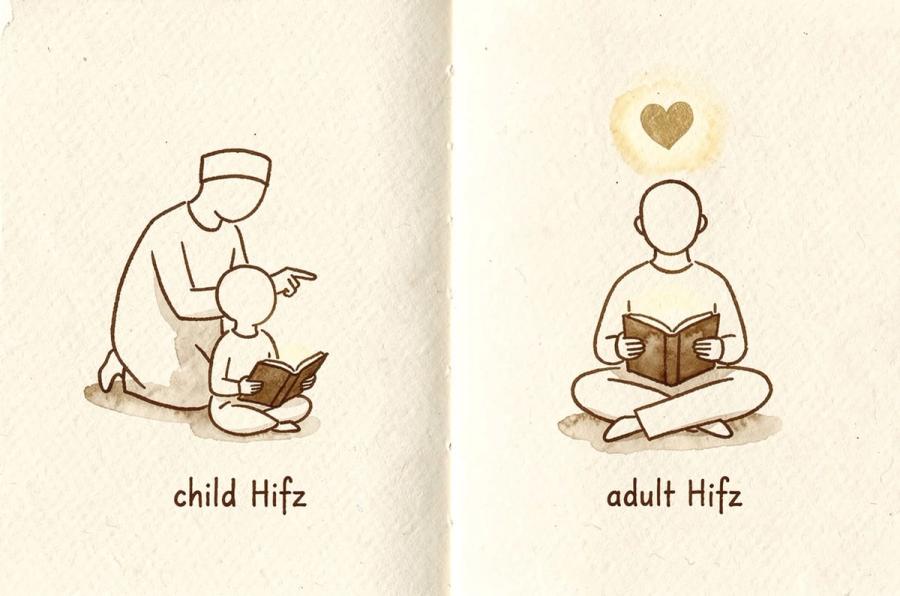
Children memorize quickly. That part is true. Young brains absorb repetition fast, and they have fewer distractions. So somewhere along the way, we turned a practical observation into an absolute rule. We started saying things like "you have to start young" as if Allah placed an expiry date on His own Book.
But the Companions of the Prophet, peace be upon him, were not all children when they memorized the Quran. Many of them came to Islam as adults and committed the entire Book to memory while raising families, running businesses, and fighting in battles. The idea of Hifz being exclusive to children is a cultural habit, not an Islamic ruling.
The Prophet, peace be upon him, said: "The one who recites the Quran and is proficient in it will be with the noble, righteous angels." (Sahih al-Bukhari, 4937). He did not say the young one. He did not say the one who started before the age of ten. He said the one who recites and is proficient. That could be you, at whatever age you are reading this.
What Adults Actually Have That Children Do Not
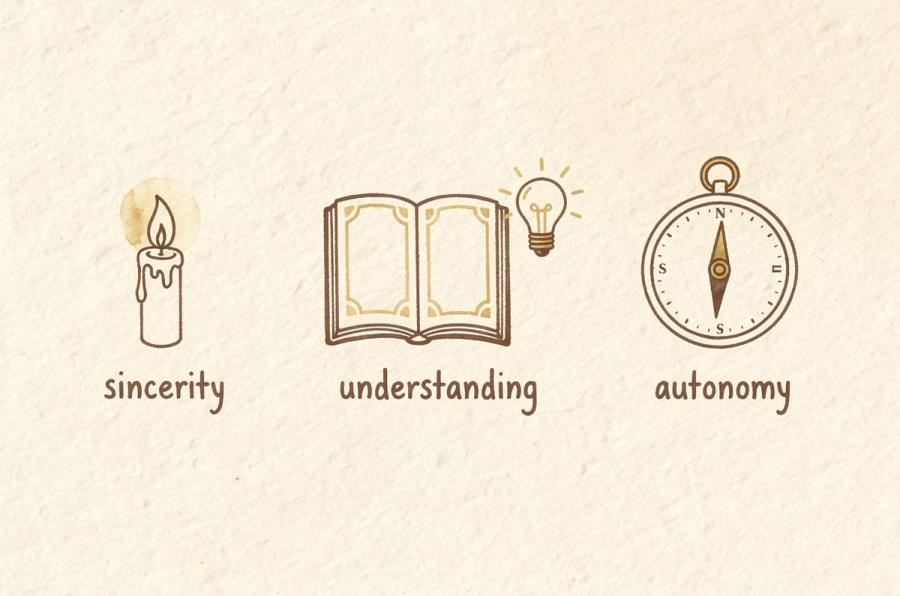
Here is something nobody talks about enough. Yes, children have biological advantages in raw memorization speed. But adults bring something far more powerful to the table: intention.
When a child memorizes Quran, they are often doing it because their parents told them to. When an adult chooses to memorize Quran after 30, they are doing it because their heart pulled them back. That sincerity changes everything. It changes the barakah in your effort, the consistency in your routine, and the depth of your connection to the words you are memorizing.
Adults also understand meaning better. When you recite an ayah about patience, or gratitude, or the reality of death, you are not just repeating sounds. You have lived enough to feel the weight of those words. That emotional and intellectual connection is one of the most underrated memorization tools there is.
And unlike a child sitting in a madrasa, you get to choose when you memorize, what method works for you, and how you structure your revision. That autonomy is a massive advantage if you use it right. If you want to understand what techniques are actually working for adults in structured programs, read this post on how to memorize the Quran faster.
What Neuroscience Says About the Adult Brain
For most of the twentieth century, scientists believed the brain was like concrete. It hardened as you aged. Once you passed childhood, the thinking went, your brain structure was essentially fixed. You could not grow new neural connections. Learning was harder. Memory was worse. Game over.
That model has been demolished. The research is not fringe or new anymore. It is mainstream neuroscience, and the core finding is something called neuroplasticity. Your brain physically rewires itself in response to what you repeatedly do, think, and learn. This happens at 25. It happens at 40. It happens at 60. The process slows with age but it never stops.
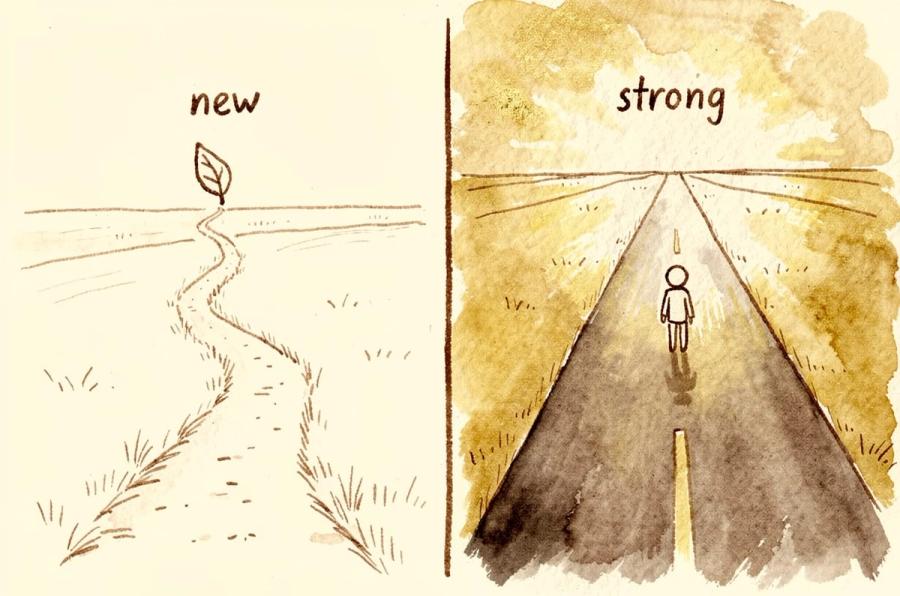
When you recite an ayah repeatedly, you are doing something physical to your brain. You are strengthening a specific neural pathway. Think of it like a dirt track through a field. The first time you walk it, it is faint. Walk it ten times and it becomes a path. Walk it a hundred times and it becomes a road. The brain works exactly like this.
The process is called myelination. A substance called myelin wraps around your nerve fibres each time a pathway is activated. The more myelin, the faster and stronger the signal. The faster the signal, the more automatic and fluent your recall becomes. This is why a surah you have revised five hundred times flows out of your mouth in salah without effort. You literally built a highway in your brain.
Myelination continues well into adulthood. Your brain at 40 is not a declining machine. It is a fully developed one.
Children memorize quickly but forget quickly too. You have probably noticed this with your own kids. They can pick up ten lines in twenty minutes and lose half of it by the next day without structured revision. That is because the young brain is highly plastic but not yet efficient at consolidation.
Adult learners have something children lack. You have context. You understand Arabic vocabulary better, you have years of salah behind you, you know many surahs already, and you have an emotional and spiritual connection to the words that a child simply cannot have yet. Cognitive science calls this chunking. Your brain groups new information alongside existing knowledge, which makes encoding and retrieval significantly faster.
The neuroscience is clear on one thing above everything else. The brain consolidates memory during sleep and through spaced repetition. A single long session once a week does almost nothing compared to fifteen focused minutes every day. The pathway needs to be walked repeatedly before it becomes a road.
This is why even twenty minutes of daily Hifz can produce real progress when done consistently. It is not about talent. It is not about age. It is about whether you show up every day and activate those pathways before they fade.
So Why Are You Still Waiting?
That is the honest question. Because if age is not the real barrier, something else is. And if you have been circling this decision for months or years without moving, you might want to read this piece on why you keep procrastinating on Quran memorization before you go any further.
Most adults who restart their Hifz journey do not fail because of their age or their memory. They fail because they try to memorize the way they did as a child, sitting for long sessions, trying to power through pages, and then burning out within weeks. Adult Hifz looks different. It has to.
Consistency in small doses beats long sessions done occasionally. Twenty minutes every morning after Fajr, done every single day, will take you further than two-hour cramming sessions on weekends. This is what adults who are actually completing Hifz are doing. They are not trying to be children again. They are building a system that fits an adult life.
Allah says in the Quran: "And We have certainly made the Quran easy for remembrance, so is there any who will remember?" (Surah Al-Qamar, 54:17). The ease is built in. Your age is not an obstacle Allah forgot to account for.
The only thing standing between you and completing your Hifz is the decision to start treating it like the priority it actually is. Not someday. Now.
Go Deeper: Our Before You Begin Series
Each of these articles takes one part of this topic further.
- Why Memorizing Quran Feels Harder as an Adult
- What Memorizing the Quran Does to Your Rizq: The Connection Almost Nobody Talks About
- What the Quran Will Say About You on Judgment Day
- What Happens If You Die Without Finishing Your Hifz
- The Companion Who Took 8 Years to Memorize Al-Baqarah
- Talaqqi in Quran Memorization: Self-Hifz Done Right
- Best Mushaf for Hifz: Choose One Layout and Never Switch
May Allah make it easy for you, bless your efforts, and let you stand before Him as a carrier of His Book. Ameen.
Start on the Right Foot With The Self-Hifz Blueprint
The Self-Hifz Blueprint is our step-by-step guide to memorizing the Quran by yourself, at home, at your own pace.
It also walks you through planning your goal, your pace and your finish date before day one, so you start with a clear path.
Get The Self-Hifz Blueprint and start your next session with a clear plan.