 Tajul Furqan

You have been meaning to restart your Hifz for months. Maybe years. And every time you think about it, you feel that familiar mix of longing and guilt.
The longing because you know what the Quran feels like in your chest. The guilt because you also know how much you have let slip away.
But here is the thing nobody talks about. Your problem is not a lack of time. It is not even a lack of motivation. The real reason you keep delaying your Hifz is something much quieter than that.
The Real Reason You Keep Delaying
Most people assume procrastination is about laziness. But for someone who once had a relationship with the Quran, it runs deeper than that.
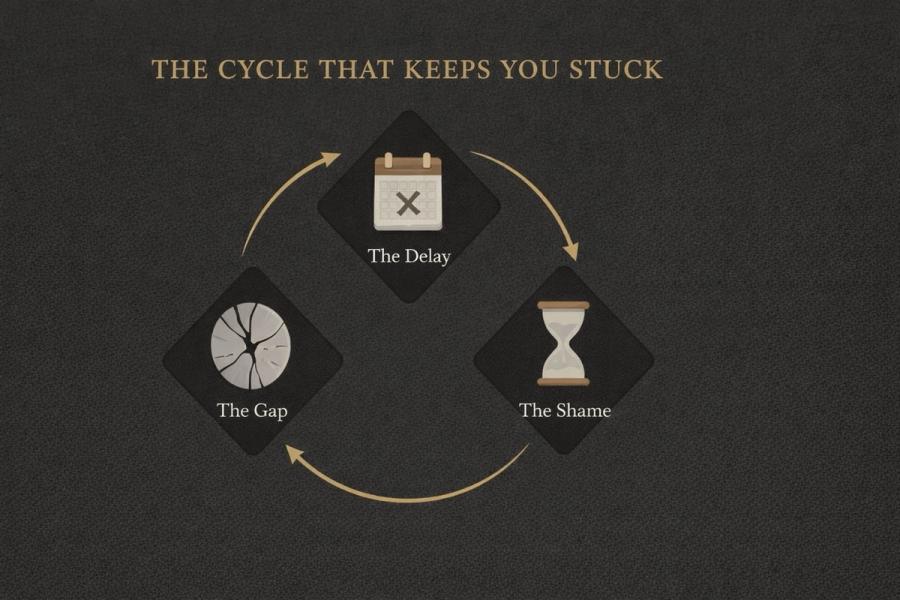
You are not lazy. You are overwhelmed by the gap. You look at how much you once knew, how much you have forgotten, and your brain quietly concludes that starting again is too painful. So you postpone it. Not forever. Just until tomorrow. And tomorrow never comes.
This is the trap. The bigger the gap feels, the harder it is to take the first step. And the longer you wait, the bigger the gap feels. It is a cycle that feeds itself.
There is also something else at play. Shame. You were the kid who memorized Surah Al-Mulk at age ten. You stood in front of the congregation. People had expectations. And now you can barely recall the first few ayat. That shame makes it easier to avoid the Quran altogether than to face the reality of where you are now.
Allah subhanahu wa ta'ala says in the Quran: "Indeed, it is We who sent down the Reminder, and indeed, it is We who will be its guardian." (Surah Al-Hijr, 15:9). The Quran is protected. What you lost was not the Quran. It was just your familiarity with it. And familiarity can be rebuilt.
What Five Years of Delay Actually Costs
Let's be honest about the math. Not to make you feel bad. Just so you can see what's real.
If you'd started five years ago with just 20 minutes a day, you would have covered thousands of lines by now. Even at a slow, steady adult pace, many people complete their Hifz in three to four years with that kind of consistency. You might already be wearing the crown. You might already be interceding for your family on the Day of Judgement.
The time passed either way. The question is only what you did with it. And this isn't about guilt. If you've been carrying that weight, you already know what guilt does to your progress. It doesn't move you forward. It freezes you.
What you lose with every passing year isn't just time. It's retention speed. It's the neurological ease of building new memory pathways. It's the compounding effect of revision that could have been happening all along. And yes, it gets harder to memorize as an adult, but it doesn't get impossible. The gap between now and never, though, that's a different story.
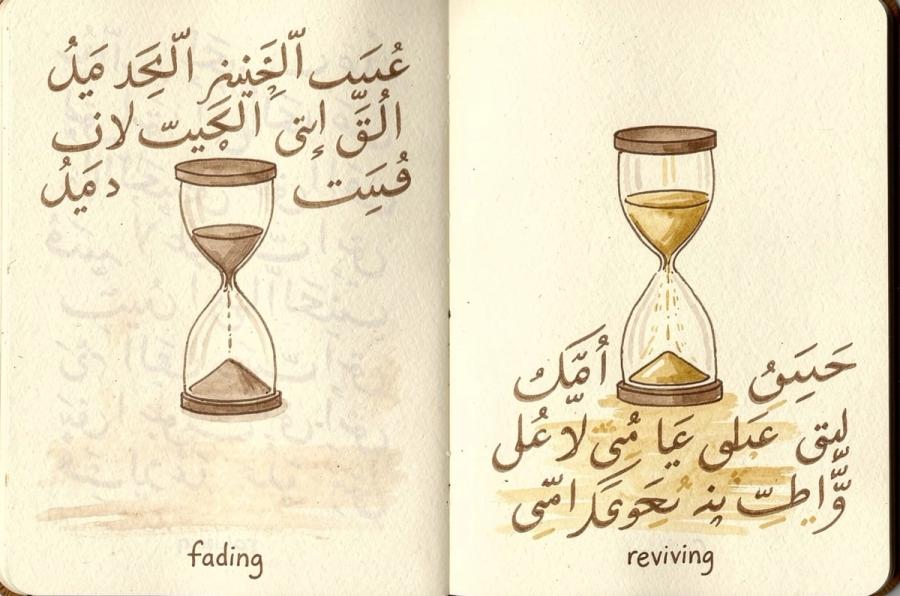
The Surahs You Already Know Are Fading
Here's the part that stings. You didn't start from zero five years ago. You had Juz Amma. You had the surahs your mother taught you. You had whatever progress you made at madrasah or at home as a teenager.
And while you've been waiting, those surahs have been quietly slipping. Not all at once. Just a word here. A line there. The fluency you once had in Al-Mulk now has gaps. You hesitate in places you used to flow. This is what delaying Hifz does even to what you already have.
The Quran doesn't stay still while you're busy. It needs to be held. And the longer you wait to hold it, the harder the grip becomes.
Why 'After Ramadan' Feels So Reasonable Every Single Time
Ramadan is real. The motivation you feel in Ramadan is real. The problem isn't the feeling, it's that the motivation crashes every Shawwal, because Ramadan motivation is emotion-driven, not system-driven.
Emotion says: after Ramadan I'll be refreshed and ready. The system says: after Ramadan, nothing external changes unless I build something that works whether I feel ready or not.
The delay feels reasonable because you're anchoring it to something real: a spiritually charged month, a life milestone, a change of pace. But the anchor keeps moving. And you keep moving with it. That's not planning. That's postponing Quran memorization dressed up as planning.
Why Willpower Alone Will Never Fix This
Every year, thousands of adults decide they are going to restart their Hifz. They feel fired up after Ramadan, or after a funeral, or after a powerful khutbah. They sit down with the mushaf, they open to Al-Baqarah, and they start reading.
Three days later, life happens. The routine collapses. And they are back to square one, except now they feel worse about themselves than before.
Motivation gets you started. Structure keeps you going. If you are relying on willpower every single morning to sit down and memorize, you are making it ten times harder than it needs to be. The Prophet, peace be upon him, said: "The most beloved deeds to Allah are the most consistent ones, even if they are small." (Sahih al-Bukhari, 6464)
Small and consistent beats big and sporadic every single time. The problem is that most people try to restart at the level they left off, instead of starting at the level they are at right now.
You do not need a grand plan. You need a reset. And a reset looks nothing like what you think it does.
The Simple Reset That Actually Works
The reset is not about memorizing more. It is about removing the resistance to sitting down in the first place.
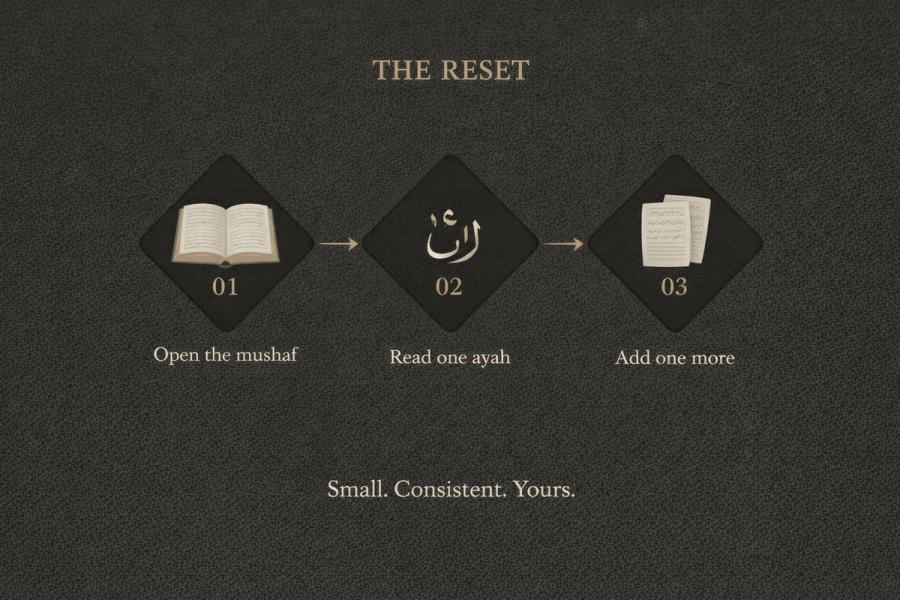
Start absurdly small. Not one page. Not one ayah. Just open the mushaf and read. That is it for day one. No pressure to memorize. No comparing yourself to where you were. Just show up and read.
Then do it again the next day. And the day after. You are not building a memorization habit yet. You are rebuilding a relationship. You are lowering the psychological barrier until sitting with the Quran feels normal again, not like a chore you have been avoiding.
Once that feels easy, you add one small layer. A single ayah to revise. Then two. Then a short surah you already know. You are not starting from zero. You are reclaiming what was already yours, one small piece at a time.
If you want to understand the techniques that make memorization faster once you are back in the flow, take a look at how to memorize the Quran faster with proven Hifz techniques. But do not go there yet. First, just show up.
Your one action for today is this: open the mushaf right now, even for five minutes, and read. Do not memorize. Do not plan. Just read. That is your reset.
Build a Routine That Lasts With The Self-Hifz Blueprint
This article is part of our Stay Consistent series. For the full picture, read A Hifz Routine for Busy Adults: A Simple Daily System.
The Self-Hifz Blueprint is our step-by-step guide to memorizing the Quran by yourself, at home, at your own pace. Chapter 26, Habits and Consistency, covers this in full: the science of showing up, every single day.
It includes a daily checklist and a sample six-month plan, so showing up becomes the easy part.
Get The Self-Hifz Blueprint and start your next session with a clear plan.