 Tajul Furqan

You've got the app, the schedule and the tracker. You know your sabak from your manzil, and you've tweaked your method more times than you can count.
But some days the ayat still slide straight off you. So when did you last check your manners with the Quran, instead of your method?
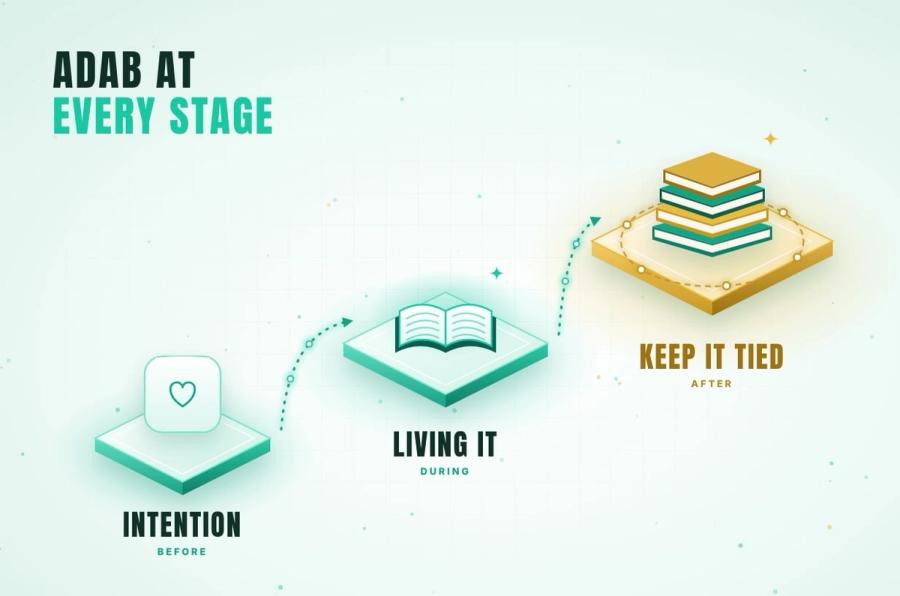
That's what the adab of memorizing the Quran is. It isn't a list of rules you were handed as a kid. It's the character of the person who carries Allah's words, and it shapes three moments: before you sit down, while you memorize, and long after a page is done.
Before You Begin, Ask Who It's Really For
The first piece of adab happens before you open the mushaf. It's your intention.
Be honest for a second. Part of you wants the title. Hafiz. The look on your mum's face. The day someone at the masjid asks you to lead Taraweeh.
That pull is normal, and you don't need to hate yourself for it. You just don't let it drive. You memorize for Allah, so His words can live inside you, and any praise that comes along is something you never chase.
Intentions drift, so you renew them. Before each session, say it quietly in your own words: Ya Allah, this is for You. It takes ten seconds and it re-aims the whole sitting.
Prepare Like It Matters, and Honour the Mushaf
You wouldn't walk into an important meeting straight from the gym, out of breath, phone buzzing. The words of Allah deserve more care than any meeting.
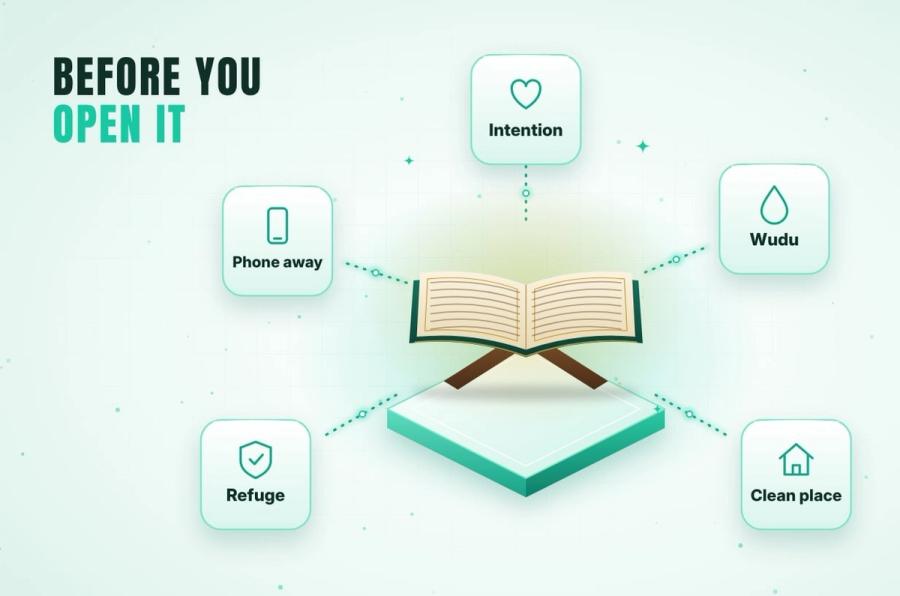
Here's what good adab before a session can look like:
- Make wudu. Most scholars hold that you need it to touch the mushaf, and even when you recite from memory it changes how you sit.
- Pick a clean, calm corner. It doesn't need to be a special room. A tidy desk is enough.
- Seek refuge in Allah from Shaytan with a'udhu billahi min ash-shaytan ir-rajim before you start.
- Put your phone face down, or better, in another room.
Then think about how you handle the mushaf itself. Hold it with clean hands. Keep it off the floor. Rest it on a stand or a raised surface, never under a pile of post or at the bottom of a gym bag.
If you memorize from an app, the same spirit applies. Don't scroll the Quran in the bathroom, and don't let it sit between memes in the same thumb flick. The way you hold something slowly teaches your heart how much it's worth.
The Heart of the Adab of Memorizing the Quran Is Living It
Here's the part most of us skip. When Aisha (may Allah be pleased with her) was asked about the Prophet's character, she said: "The character of the Messenger of Allah was the Qur'an." (Sahih Muslim 746a, sahih)
He didn't only carry it. He lived it.
So when you memorize an ayah about patience, that's your homework for the week. When you memorize an ayah about speaking kindly, the test usually shows up at the dinner table. The ayat you hold should slowly change how you talk, how you work and how you treat people when nobody is watching.
This is also where humility lives. More juz don't make you better than anyone else. The more you carry, the more you'll be asked about, and the softer you should become.
Try this. Pick one ayah from this week's sabak and write down one thing it asks of you. Just one. Act on it before the week is out.
After You Memorize, Keep It Tied
The last piece of adab is loyalty. You don't memorize a page and then walk away from it.
The Prophet (peace be upon him) said: "The example of the person who knows the Qur'an by heart is like the owner of tied camels. If he keeps them tied, he will control them, but if he releases them, they will run away." (Sahih al-Bukhari 5031, sahih)
Revision is how you honour what Allah let you carry, not a chore you bolt on after the real work. A few minutes a day with your old pages is adab, just as much as wudu is.
And if a page has already slipped, that isn't the end of your adab. Going back to it, humbly and without drama, is the adab.
Adab on the Days It Feels Hard
Good manners with the Quran aren't only for the easy days. They also shape how you carry yourself when your heart feels heavy, and that's what the rest of this series is for.
- When you can't bring yourself to open the Quran, even though you want to.
- When Shaytan keeps pulling you away from your Hifz with a hundred small distractions.
- When comparing your Hifz progress to other people quietly steals your joy.
- When you need to rest from Hifz burnout without losing progress.
- When anxiety or brain fog makes every ayah feel heavy.
- When life falls apart and you want to keep your Hifz alive through hardship.
You don't need perfect manners before you start. Before your next session, make wudu, renew your intention, and recite one page you already know with your full heart. That is the adab of memorizing the Quran, one sitting at a time.
May Allah make you among those who carry His Book with the best of character, and make it a light for you in this life and the next.
Carry the Quran in Your Heart With The Self-Hifz Blueprint
The Self-Hifz Blueprint is our step-by-step guide to memorizing the Quran by yourself, at home, at your own pace.
Alongside the methods, it covers the adab and character that keep the Quran in your heart, not only in your memory.
Get The Self-Hifz Blueprint and start your next session with a clear plan.