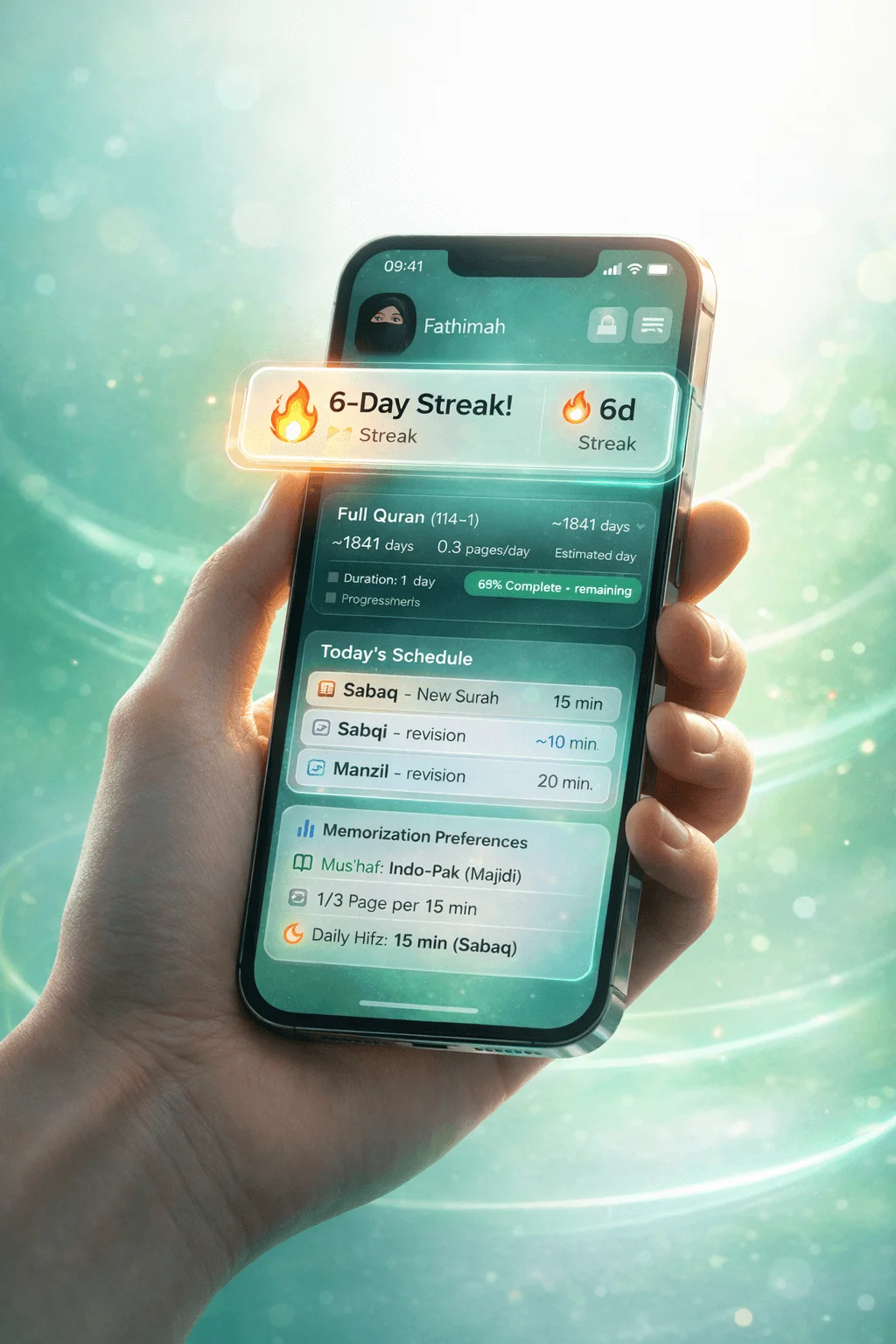
You have set the alarm. You have made the intention. You have even put the Mushaf on the bedside table so it is the first thing you see. And then Fajr comes and you hit snooze, drag yourself out of bed half-conscious, stare at the page, retain absolutely nothing, and spend the rest of the day feeling like a failure. Sound familiar? You are not weak. You are not less devoted than the person who wakes up sharp and clear at 4am. You just have a different brain rhythm. And nobody in the Hifz space is being honest with you about that. Let us fix that right now. Where the 'Memorize After Fajr' Advice Actually Comes From The Prophet, peace be upon him, said: 'Allah has blessed my Ummah in its early morning hours.' (Abu Dawud, graded sahih by Al-Albani). This is authentic and true. The barakah of the early hours is real. Nobody is disputing that. But here is what the scholars and productivity researchers both agree on: barakah in the morning does not mean your brain's peak cognitive window is between 4am and 6am. Barakah touches rizq, time, and effort. Your brain's ability to form new memories is a biological reality that varies person to person. Chronobiology — the science of internal body clocks — has shown clearly that roughly 30 percent of people are natural evening types. Their alertness, focus, and memory consolidation peak in the late morning or evening. Forcing them to memorize at dawn is like asking someone to sprint with their shoes on the wrong feet. They can do it. They will just bleed. The Real Enemy Is Not the Time. It Is the Inconsistency. Think about every Hifz restart you have attempted. How many of them crashed because you could not maintain the early morning schedule? The alarm. The guilt. The skipped session. The spiral. If that loop feels familiar, check out our post on why you keep restarting your Hifz and never finishing — because the pattern usually runs deeper than just the time of day. The best time to memorize Quran is the time you will actually show up for. Consistently. Without hating yourself afterward. That is not a lowering of standards. That is the actual standard. Consistency over intensity is the entire game in Hifz. You know this from experience. A person who does ten minutes every night for a year will almost always outperform the person who does forty-five minutes three mornings a week and nothing the rest. How to Find YOUR Best Time to Memorize Quran Stop guessing. Run a simple two-week experiment. Pick three different windows and try each for a few days: right after Fajr, mid-morning or lunch break, and after Isha. Keep a one-line note each day: 'Sharp and retained well' or 'Foggy and just reading.' Within two weeks, the pattern will be obvious. For most non-morning-people who work full-time, the sweet spots tend to be one of these: After Isha, once the house is quiet and the day's noise has settled A lunch break window, when the morning brain fog has lifted but afternoon fatigue has not yet hit The gap between Asr and Maghrib, especially on weekends A commute — yes, audio-based revision during a commute is genuinely powerful, and we have a full post on how to memorize Quran on your commute if you want the specifics The point is: you are looking for your window, not anyone else's. What to Do About the Barakah of Fajr If You Are Not Memorizing Then You do not abandon the early morning. You just change what you do in it. Use Fajr time for revision of what you already know. Reciting memorized portions in salah, or doing a quick listen-through of a surah you have already locked in. This is light on the brain, spiritually powerful, and keeps your existing Hifz alive. The heavy lifting of new memorization happens in your peak window later. This also lines up with what teachers call the new-to-old ratio in Hifz. If you want to understand how to balance new memorization with revision across your day, the Hifz revision ratio formula breaks it down practically. One More Thing Nobody Tells You If you have been forcing the morning schedule and it keeps failing, there is a chance you have also started associating Hifz with dread. With that horrible feeling of dragging yourself out of sleep only to feel like your brain is made of wet sand. That association is dangerous. It quietly makes you avoid Hifz altogether, even when you have energy, because your brain has learned that Quran memorization feels bad. Breaking that association matters as much as finding the right time. And if you have been dealing with mental exhaustion on top of this, the post on Hifz after work when you are mentally exhausted speaks directly to that state. Your action step this week is simple: tonight, after Isha, open your Mushaf for just five minutes. No pressure to memorize anything new. Just reconnect. Let your brain experience Hifz at a time when you are actually awake. Then see what happens. Whatever Your Window Is, HifzBuddy Fits Around It If you are restarting after a break and mornings have always been the thing that broke your streak, this is your permission to do it differently. You do not need to become a morning person to become a Hafiz. You need a structure that actually works for your life. That is exactly why we built HifzBuddy for adults like you — so your sessions, your teacher, and your revision plan fit the real hours of your real day, not a fantasy schedule. If you already have memorized surahs and are working on revision, HifzBuddy connects you with a teacher who will hold you accountable in your window, not theirs. Evening learner, lunch-break learner, weekend warrior — it all works. And if you are just getting serious for the first time and want to build the right habits from day one, consider giving HifzBuddy a try this week. You have already spent years trying it the hard way. Try it the smart way.
 Tajul Furqan