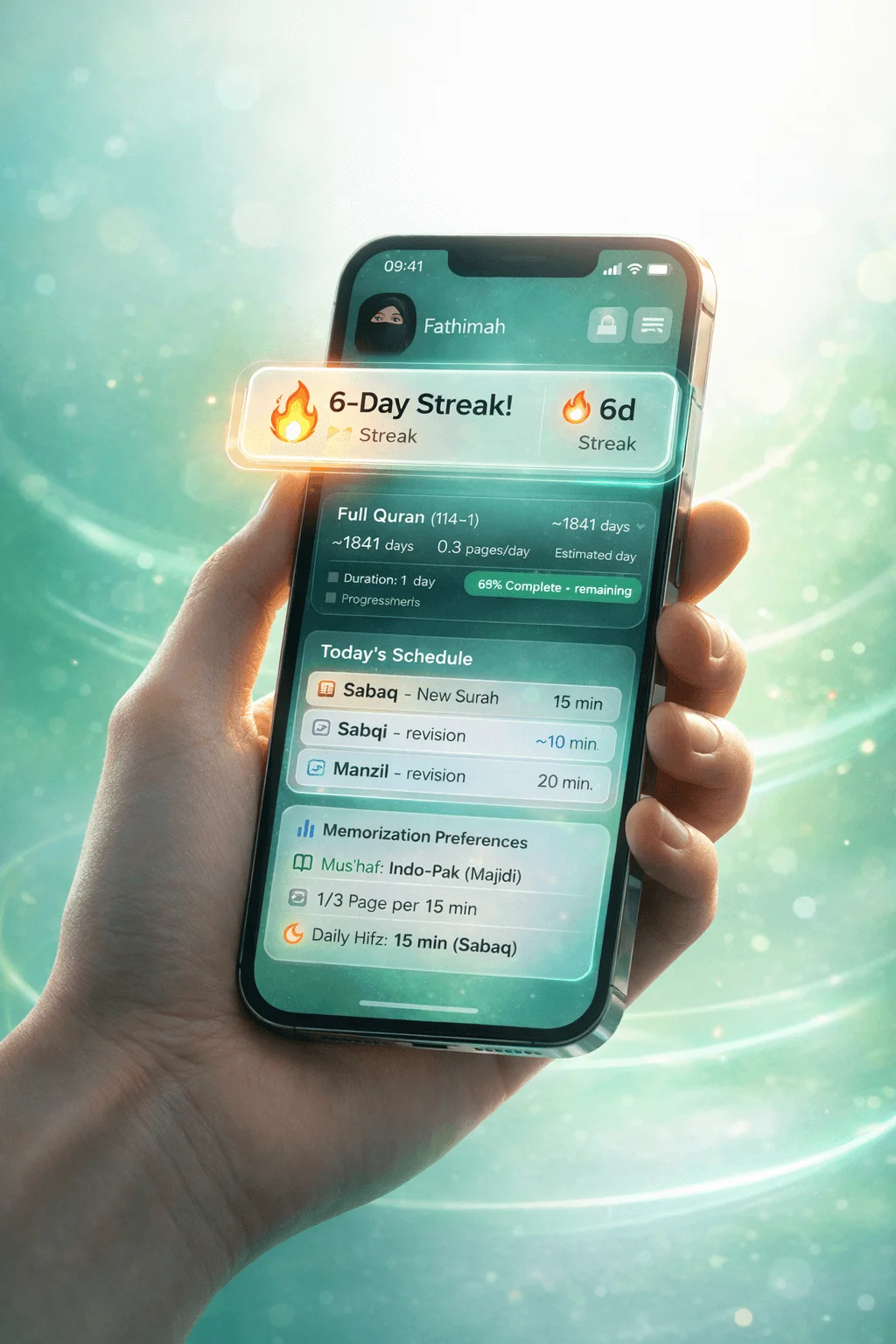
Ramadan ends. You had a streak going. You were waking up before Fajr, reviewing pages, feeling something. Then Eid came, then the family visits, then work caught up, and by the second week of Shawwal you hadn't touched the Quran in nine days. You didn't plan to stop. You never do. But here you are again, carrying the same quiet guilt you carried into last Ramadan, telling yourself this year will be different. It might be. But not because of Ramadan. Because of what you understand about why this keeps happening. Ramadan Is a Boost, Not a Foundation The environment of Ramadan does the heavy lifting for you. The fasting quiets the nafs. The nights get longer. The shayateen are chained. Every Muslim around you is visibly trying. The whole month is engineered by Allah to lower the resistance between you and ibadah. That's not a weakness. That's a mercy. But if you mistake the Ramadan environment for your own discipline, Shawwal will always shock you. The motivation wasn't coming from you. It was coming from the month. And when the month left, the motivation left with it. This is the Ramadan Hifz motivation crash, and it hits almost everyone who hasn't built a Hifz habit that runs on something more stable than feeling. The Habit You Built Was Attached to the Wrong Thing Most people who memorize in Ramadan attach their habit to conditions. The conditions being: it's Ramadan, I feel motivated, the atmosphere is right, I have more time. The moment one condition changes, the whole structure collapses. A Hifz habit that only works when conditions are perfect isn't a habit. It's a seasonal ritual. The reason you keep restarting Hifz and never finishing isn't lack of love for the Quran. It's that your habit was never designed to survive the ordinary. It was designed for the extraordinary month, and ordinary months broke it every time. If you've noticed this pattern before, the post on why you keep restarting your Hifz and never finishing names exactly what's happening underneath. What Happens in Your Brain After Ramadan Your brain isn't betraying you in Shawwal. It's doing what brains do. During Ramadan, you built up a series of neural associations: fasting equals Quran time, Tarawih equals review, pre-Suhoor equals memorization. Those associations were real and they worked. But when the external triggers disappear, the brain needs new ones. If you don't give it new anchors, the behavior disappears. It doesn't mean you've lost the progress or the love. It means the scaffolding came down. The fix is not more willpower. It's rebuilding the trigger without the Ramadan conditions attached to it. You need a time, a place, and a cue that exists in your normal life. Even if it's only 20 minutes, as covered in how to make real Hifz progress in just 20 minutes a day, a small consistent slot beats a heroic Ramadan sprint every time. The Shift That Actually Breaks the Cycle Stop trying to replicate Ramadan energy in Shawwal. You will fail. The energy is gone and chasing it will make you feel like a failure when it doesn't come back. Instead, aim for boring consistency. Five lines after Fajr, every day, even when it feels flat. Not because it feels like Ramadan. Because you made a decision that isn't tied to how it feels. The Prophet, peace be upon him, said: "The most beloved deeds to Allah are the most consistent, even if they are small." (Sahih al-Bukhari, hadith 6464, sahih). That hadith was not revealed in Ramadan. It was a statement about the rest of the year. About your Tuesday morning in Shawwal when nobody is watching and nothing feels special and you open the Quran anyway. That moment is what separates those who finish Hifz from those who only start it. Continue Quran Memorization After Ramadan With This One Rule Before Ramadan ends this year, or before your next restart, set one rule: the minimum doesn't change when life does. Your maximum can change. Traveling, sick, exhausted? Reduce the amount. But the act of sitting with the Quran, even for five minutes, does not stop. You miss Ramadan energy? Fine. You still open the mushaf. That non-negotiable minimum is what keeps the chain alive. If you're not sure how to protect your Hifz time when life piles up, the daily Hifz routine system for adults gives you a practical structure that works inside a real schedule, not a Ramadan one. Ready to Continue Quran Memorization After Ramadan? HifzBuddy Can Help If you're in that Shawwal drop right now, or you can feel it coming, you don't need another Ramadan to restart. You need a structure that holds you accountable on the ordinary days, not just the blessed ones. That's exactly why we built HifzBuddy for adults who already know how to memorize but keep losing the habit when the season changes. If you've just completed your first solid Ramadan of Hifz and want to keep advancing, HifzBuddy will help you protect what you've built and add to it consistently. If you have pages from years ago sitting in your memory, half-faded and untouched, HifzBuddy is where you come to revise and rebuild. And if this is the Ramadan where you finally said enough waiting, HifzBuddy is where that intention becomes a daily practice. The Quran doesn't need Ramadan to be memorized. It needs you to decide that Shawwal is also a month of the Quran. Start there.
 Tajul Furqan