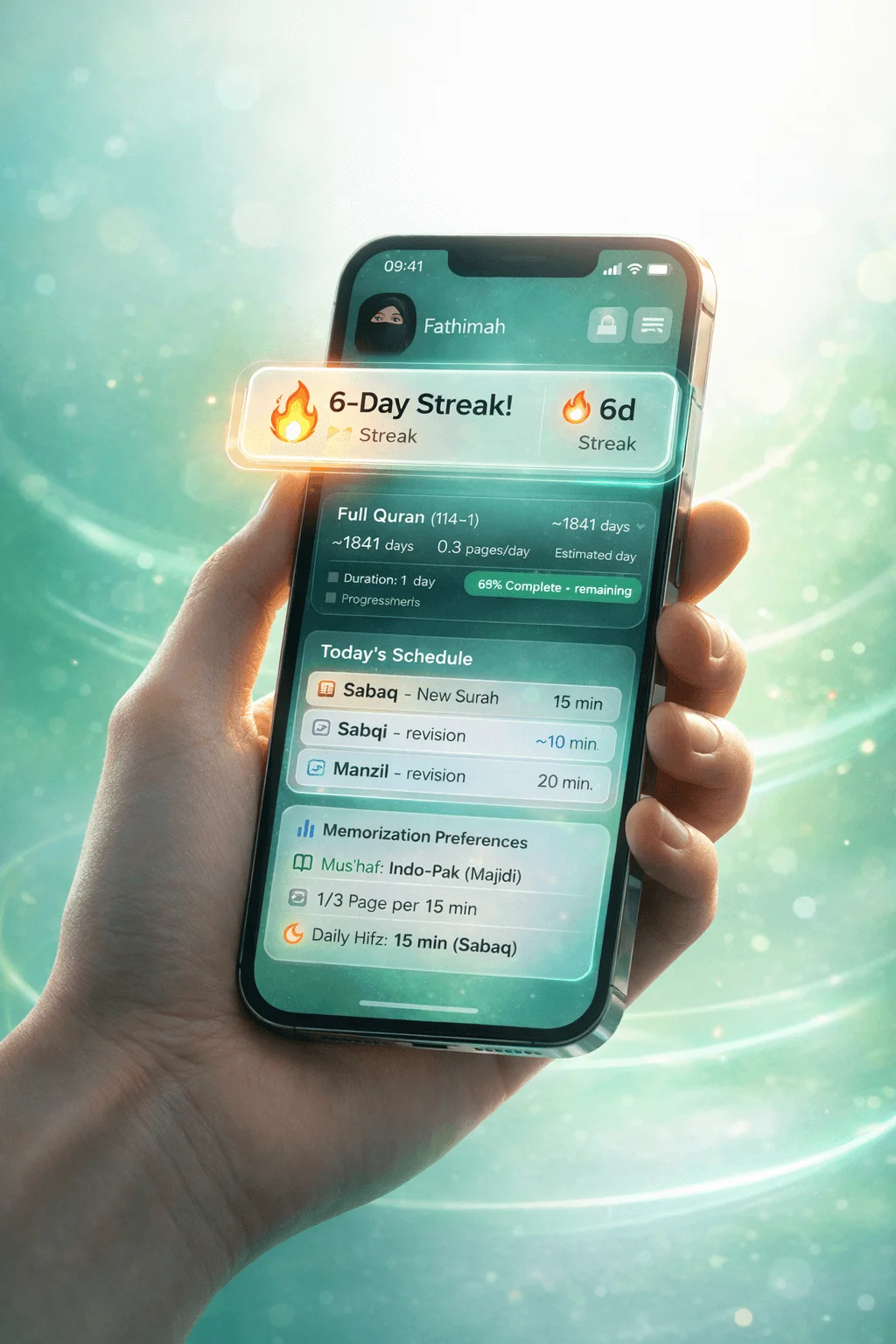
You've already searched. You checked the local masjid. They have a weekend school for kids, not adults. You asked in the community group chat. Someone gave you a number. You called it. Nothing came of it. This is the quiet struggle of being a Muslim in the West who wants to make Hifz. The motivation is there. The time, you're working on it. But the teacher — the actual, qualified, experienced teacher who can hear you, correct you, and push you forward — feels impossible to find. Here's what you need to hear: the absence of a local teacher is a real obstacle. It's not in your head. But it's also not the full stop you've been treating it as. Why Diaspora Muslims Get Stuck at This Exact Point Growing up, Hifz happened in a madrasa or at a teacher's house down the road. The whole system assumed geography. You lived near a teacher, you walked to them, and the relationship was built face to face. That model doesn't transfer cleanly to life in Manchester, Chicago, Toronto, or Sydney. Your masjid is understaffed. The one Hafiz in your area teaches full-time and doesn't take adult students. You've been told, directly or indirectly, that Hifz is for children. So you wait. You tell yourself you'll sort it out. And months become years. If any of this sounds familiar, you might also recognise what's described in why you keep restarting your Hifz and never finishing — the stall point is real, and geography is one of the biggest triggers. What You Actually Need from a Teacher (And What You Don't) Let's be honest about what a teacher does in Hifz. They listen to your recitation, correct your tajweed, hold you accountable, and give you a structured plan. That's it. None of those four things require physical proximity. You don't need someone in the same room to hear you recite. You don't need a physical madrasa to have structure. What you need is a system that replaces what geography used to provide — and online Hifz teachers exist precisely for this reason. The Prophet, peace be upon him, said: "Whoever travels a path in search of knowledge, Allah will make easy for him a path to Paradise." (Sahih Muslim, hadith 2699, sahih). You are on that path. The form it takes — whether in-person or online — doesn't change what it is. How to Memorize the Quran Without a Local Teacher The first shift is accepting that waiting for a local teacher is its own choice. It feels passive, but it's active. You are choosing geography over Hifz every single day you delay. An online Hifz teacher gives you exactly what a local one would — live sessions, tajweed correction, accountability, and a personal plan — without the constraint of your postcode. Thousands of Muslims in the West are memorizing the Quran this way right now. It works because the accountability is real, the correction is real, and the progress is real. Here's what a functional online Hifz system looks like for an adult with a busy life in the West: Daily new memorization: even 5-10 lines before Fajr is enough to move forward — see how this fits into a tight schedule in how to make real Hifz progress with only 20 minutes a day Regular recitation to your online teacher: weekly or twice-weekly sessions where you recite what you've memorized and receive corrections Structured revision: cycling through what you've already memorized so it doesn't slip — without this, new memorization actively hurts your old pages A plan that accounts for your life: work, family, fatigue — not a madrasa timetable built for a 10-year-old The structure matters more than the location. If you've ever lost ground because you were memorizing new surahs without revising old ones, the post on why adding new surahs makes you forget old ones explains exactly why that happens and how to fix it. The Mindset Shift That Changes Everything You're not missing a teacher. You're missing permission. Permission to start without perfect conditions. Permission to use what's available rather than wait for what's ideal. Allah says in the Quran: "And We have certainly made the Quran easy for remembrance, so is there any who will remember?" (Surah Al-Qamar, 54:17). That ease is a promise. The difficulty isn't in the Quran itself — it's in the stories we build around our circumstances. You are in the West. That comes with real challenges. Scattered Muslim communities, limited Islamic infrastructure, a culture that pulls hard in the opposite direction. But those same conditions also give you access to qualified online Hifz teachers anywhere in the world, flexible scheduling that a traditional madrasa never could, and a level of personal accountability that actually fits adult life. The diaspora Muslim who finishes their Hifz isn't the one who found a perfect local teacher. They're the one who stopped waiting. Start Your Hifz with HifzBuddy — Built for Adults in the West If you've been holding off on Hifz because you can't find a qualified local teacher, that reason ends today. We built HifzBuddy specifically for adult Muslims in the US, UK, and beyond who are serious about completing their Hifz without putting their lives on hold. If you're restarting after a long break, HifzBuddy gives you a qualified online Hifz teacher who will meet you where you are — no judgment, no starting from scratch unless you want to. If you're advancing and revising what you already have, your teacher will build a revision system around your real schedule, not an imaginary one. And if this is your first real attempt as an adult, you'll get a structured plan that accounts for work, family, and the realities of life in the West. Geography was never meant to be the reason you don't finish. Give HifzBuddy a try this week and find out what's possible when you have the right support behind you.
 Tajul Furqan